
Lepusheng Lepusheng

How to Choose a Private Label Glue Tape Supplier?

Time:2026-09-24 Author:Isabella
0%

Choosing a Private Label Glue Tape supplier is more than comparing prices and printed packaging. The adhesive must perform reliably on real surfaces, from cardboard cartons to smooth plastic sleeves. A professional evaluation examines tack, holding power, peel strength, and clean removal. It also considers the tape’s width, thickness, release liner, roll length, and storage stability. Small details matter. A loose edge can damage a product’s presentation.

Experienced buyers usually begin with samples, not promises. Test each sample in the conditions your customers will face. Apply it to dusty cartons, curved edges, and textured materials. Check whether the tape unwinds evenly or tears during application. Record results after several hours and days. Short tests can mislead. Temperature and humidity often change adhesive performance.

Supplier credibility requires more than attractive brochures. Ask for production details, quality records, material information, and practical customization limits. A reliable factory should explain its inspection process clearly. It should also communicate lead times, minimum order quantities, packaging options, and corrective actions. Factory audits or independent verification can add confidence. Still, no supplier looks perfect on paper. A polished sample may hide inconsistent batch control. That possibility deserves attention.

The right partnership balances technical capability, honest communication, and repeatable quality. Review how the supplier handles questions, failed tests, and design changes. Their response reveals operational maturity. Consider a small trial order before committing to large volumes. This approach may feel slower, but it reduces expensive surprises. The final choice should support your brand’s reputation, customer experience, and long-term supply needs. Reliability wins.
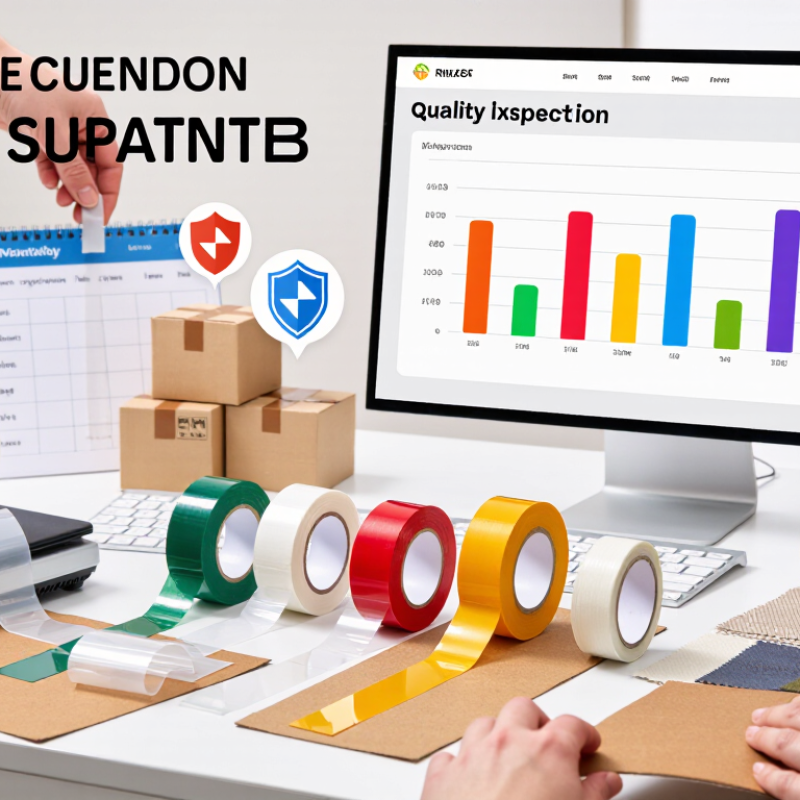
How to Choose a Private Label Glue Tape Supplier?

Define Your Private Label Glue Tape Requirements

Before choosing a private label glue tape supplier, define how the tape will be used. Identify the surfaces, application method, temperature range, and expected holding time. A tape for cardboard packaging differs greatly from one used on painted walls or smooth plastic.

Specify the tape construction clearly. Record the adhesive type, backing material, width, length, core size, liner color, and roll direction. Mention whether users need clean removal, high initial tack, or long-term shear strength. Small details matter. A 12-millimeter roll may fit your dispenser, while a 19-millimeter roll may not. Do not rely on vague terms like “strong” or “premium.”

Request technical data and samples before approving production. Check adhesion after 24 and 72 hours, especially on dusty, textured, or low-energy surfaces. Test the tape in heat, humidity, and ordinary warehouse conditions. A sample can perform well in a laboratory but disappoint during real packing work. That happens.

Your private label requirements should also cover packaging dimensions, label artwork, carton markings, batch identification, and acceptable defect limits. Ask for material declarations, quality inspection records, and a clear replacement policy. Confirm minimum order quantities and lead times in writing. A first specification is rarely perfect. Leave room for revision after user feedback, because the quiet problems often appear after shipment.

Evaluate Adhesive Tape Supplier Capabilities

How to Choose a Private Label Glue Tape Supplier?

Evaluate Adhesive Tape Supplier Capabilities

A capable glue tape supplier should explain its adhesive system clearly. Ask whether it uses water-based, hot-melt, or solvent-based formulations. Each option affects tack, holding power, odor, and storage life. Request technical data, not only attractive samples.

Review the supplier’s production experience with your tape structure. They should control coating weight, liner release, slitting accuracy, and edge cleanliness. Small differences can cause lifting, wrinkles, or uneven dispensing. Ask for batch records and inspection standards. Useful tests include peel adhesion, shear resistance, loop tack, and aging performance. Test samples on your actual surfaces, not just cardboard.

Quality systems matter. Check whether the supplier calibrates equipment and keeps traceable records. Confirm how it handles failed batches, complaints, and corrective actions. Private label work also requires reliable printing, packaging control, and repeatable color matching. Discuss minimum order quantities, sample timelines, and production capacity before signing an agreement.

A polished sample can mislead. Performance may change after heat, dust, or long storage. I would request samples from different production lots when possible. That step adds time, but it reveals consistency. Some suppliers communicate confidently yet provide weak evidence. Treat vague answers as a warning. A supplier worth considering admits limitations and proposes practical testing. Pricing still matters, but capability protects your reputation.

How to Choose a Private Label Glue Tape Supplier? - Evaluate Adhesive Tape Supplier Capabilities
Evaluation Dimension Key Capability to Assess Recommended Benchmark Why It Matters for Private Label Projects Verification Evidence Suggested Weight
Adhesive Performance Initial tack, peel adhesion, holding power, and shear resistance Test results should meet the agreed application standard and remain consistent across production lots. Adhesive performance directly affects bonding reliability, user satisfaction, and product returns. Technical data sheet, internal test reports, third-party laboratory reports, and retained production samples 18%
Substrate and Tape Construction Selection of paper, film, nonwoven, foam, liner, coating, and release materials Materials should be suitable for the intended surface, temperature range, storage conditions, and dispensing method. Correct construction improves clean application, dimensional stability, and resistance to tearing or curling. Material specifications, construction diagrams, sample rolls, and application testing 10%
Customization Capability Private label printing, tape width, roll length, core size, packaging, and adhesive formulation adjustment Supplier should support the required specifications with documented change-control procedures. Flexible customization allows the product to match the buyer's positioning, packaging format, and end-use requirements. Customization checklist, packaging mock-ups, print proofs, and approved samples 12%
Production Capacity Coating, drying, slitting, rewinding, printing, and packing capacity Available capacity should cover forecast demand with additional room for seasonal peaks and replacement orders. Capacity shortages can cause delayed launches, inconsistent supply, and emergency procurement costs. Production schedule, equipment list, monthly capacity statement, and site audit 10%
Quality Management Incoming inspection, in-process controls, final inspection, traceability, and corrective action Each batch should be traceable by production date, material lot, operator record, and inspection result. Documented quality controls reduce variation and make it easier to investigate complaints. Quality manual, inspection records, certificate documentation, nonconformance reports, and audit results 15%
Testing and Validation Peel, tack, shear, aging, temperature, humidity, and surface compatibility testing Testing should reflect actual use conditions rather than relying only on standard room-temperature tests. Realistic validation helps prevent failures caused by heat, cold, moisture, rough surfaces, or long-term storage. Test methods, acceptance criteria, laboratory equipment list, and application test records 10%
Regulatory and Safety Compliance Material declarations, restricted-substance control, labeling, and market-specific compliance support Supplier should provide current compliance documents appropriate to the destination market and product application. Compliance gaps may lead to customs delays, retailer rejection, product recalls, or legal exposure. Declarations of conformity, safety data documentation where applicable, restricted-substance statements, and audit records 10%
Minimum Order Quantity Minimum order requirements for standard items, custom adhesive, printed packaging, and special sizes MOQ should align with the launch budget, sales forecast, shelf-life considerations, and inventory turnover plan. A manageable MOQ lowers inventory risk during product testing and early market development. Written quotation, MOQ schedule, setup charges, and sample-to-production policy 6%
Lead Time and Delivery Reliability Sample development, production lead time, export preparation, and on-time delivery performance Lead times should be clearly defined, and delivery performance should be monitored against confirmed order dates. Reliable delivery supports launch schedules, promotional campaigns, and uninterrupted customer fulfillment. Production timeline, historical delivery records, capacity plan, and shipping terms 5%
Packaging and Storage Moisture protection, roll protection, carton strength, labeling, and storage guidance Packaging should protect the tape from dust, pressure, humidity, heat, and deformation during transport and storage. Proper packaging preserves adhesive performance and reduces transit damage and warehouse claims. Packaging specifications, carton test results, palletization plan, and storage instructions 4%
Technical Support Application guidance, sample selection, troubleshooting, and response to performance issues A qualified technical contact should provide documented recommendations and timely corrective actions. Technical support reduces development time and helps resolve bonding issues before commercial release. Technical contact details, application guides, troubleshooting records, and development support process 5%
Commercial Transparency Quotation structure, tooling or setup fees, payment terms, price validity, and cost-change notices All recurring and one-time costs should be itemized before approval of samples or purchase orders. Transparent pricing improves cost planning and prevents unexpected charges during scale-up. Detailed quotation, commercial terms, cost breakdown, and revision history 5%
Recommended use: score each capability from 1 to 5, multiply the score by the suggested weight, and approve suppliers only after technical samples, compliance documents, and production capability have been verified.

Check Product Quality, Safety, and Compliance

Choosing a private label glue tape supplier starts with measurable quality, not attractive packaging. Grand View Research estimated the global adhesive tapes market at about USD 78.9 billion in 2023, with continued growth through 2030. That growth increases supplier options, but also makes verification more important. Ask for peel adhesion, tack, shear, and aging results using recognized methods such as ASTM D3330, D2979, and D3654. Request results from the exact tape construction, not a similar sample.

Test the adhesive.

A reliable supplier should provide batch records, a certificate of analysis, and a safety data sheet. Check the backing, adhesive chemistry, liner release, roll edges, and winding tension. Store trial rolls in controlled conditions, then test them on cardboard, plastic, glass, and painted metal. Observe residue after 24 hours and after heat exposure. One practical warning: a perfect first roll proves little. I would retain samples from several production batches.

Compliance needs equal attention. Check whether materials meet destination-market requirements, including REACH and RoHS where applicable. For food-contact or children’s products, request specific migration and safety evidence rather than general declarations. A 2024 packaging industry outlook from Smithers highlights rising demand for traceability and material transparency across converting supply chains. Still, paperwork can be incomplete or outdated. Ask for document issue dates, testing laboratories, product codes, and change-notification procedures. Suppliers should explain what happens when adhesive formulas, films, or manufacturing sites change. That conversation often reveals more than a polished audit report.

Compare Customization, Pricing, and Minimum Orders

Choosing a private label glue tape supplier requires more than comparing unit prices. Grand View Research valued the global pressure-sensitive adhesives market at about USD 13.6 billion in 2023, with continued growth expected through 2030. This expansion gives buyers more options, but quality can vary sharply. Request samples with the same liner, adhesive type, width, and roll length as your planned product. A glossy surface may look attractive, yet poor release performance can slow packing lines.

Customization usually affects both price and minimum order quantity. Ask whether the supplier can adjust adhesive strength, color, core size, packaging, and printed labels. Smithers reports that packaging remains a major demand area for pressure-sensitive materials, making presentation important for private label products. However, custom printing often requires dedicated cylinders, plates, or packaging molds. Confirm these charges separately. Small orders may appear cheaper, but their per-roll cost can become surprisingly high.

Pricing should include freight, testing, artwork preparation, and rejected-roll replacement. Request a landed-cost quotation, not only an ex-factory figure. Industry purchasing benchmarks often show that larger runs reduce conversion costs, but excessive inventory can damage cash flow. A practical starting point is a pilot order with clear acceptance criteria. Define peel strength, aging performance, carton damage limits, and roll telescoping tolerance. I would still question any unusually low quote. It may be efficient sourcing—or simply missing costs. Get the details in writing.

Verify Service, Supply Stability, and Partnership Terms

How to Choose a Private Label Glue Tape Supplier?

A reliable supplier must provide more than attractive pricing. According to Grand View Research, the global adhesive tapes market reached approximately USD 85.9 billion in 2023 and may grow at about 5.2% annually through 2030. This growth increases supplier competition, but service quality still separates capable factories from temporary traders. Ask for technical consultation, sample records, adhesive test results, and clear complaint procedures. A responsive engineer should explain tack, peel strength, aging, and temperature limits in practical terms.

Check supply stability with evidence, not promises. Request recent OTIF delivery data, production capacity, raw material sources, and batch traceability. A useful supplier should offer safety-stock planning and communicate delays before your warehouse becomes empty. It should also provide inspection reports and certificates for every production batch. The Smithers adhesive industry reports highlight continuing demand for reliable converting and coating capacity, yet capacity alone cannot guarantee consistency. One factory visit is not enough. Repeated audits matter.

Partnership terms deserve equal attention. Confirm MOQ, lead time, payment stages, forecast changes, packaging ownership, and price-adjustment rules. Define what happens after a failed adhesion test. Will the supplier replace goods, share testing costs, or simply request another order? That detail matters. A low MOQ may seem efficient, but unstable pricing can erase the benefit. In practice, buyers sometimes focus heavily on samples and neglect after-sales response. That is an imperfect decision. A strong agreement should include quarterly reviews, corrective-action deadlines, and a realistic exit process.

FAQS

What adhesive systems should I ask a supplier about?

Ask whether the tape uses water-based, hot-melt, or solvent-based adhesive. Each can affect tack, holding power, odor, and storage life.

Which production details can affect tape performance?

Coating weight, liner release, slitting accuracy, and clean edges matter. Small variations may cause wrinkles, lifting, or uneven dispensing.

What tests should I request for glue tape samples?

Request peel adhesion, shear resistance, loop tack, and aging results. Test the tape on your actual surfaces, not only cardboard.

How can I check whether quality stays consistent between batches?

Ask for batch records, inspection standards, calibrated equipment records, and traceability. Samples from different lots can reveal variation.

What should I check for private label printing and packaging?

Confirm packaging control, print quality, and repeatable color matching. A polished sample alone may not reflect later production.

How can I assess a supplier’s delivery reliability?

Request recent on-time delivery data, production capacity, raw material sources, and batch traceability. Ask how delays are communicated.

Which partnership terms should be clear before an agreement?

Confirm MOQ, lead time, payment stages, forecast changes, packaging ownership, and price-adjustment rules. Small details matter.

What should happen if a batch fails an adhesion test?

Agree in advance on replacement goods, testing costs, and corrective actions. Vague promises are not enough.

Are low prices and attractive samples sufficient reasons to choose a supplier?

No. Performance can change after heat, dust, or long storage. Pricing matters, but testing and service protect your reputation.

How often should supplier performance be reviewed?

Consider quarterly reviews and repeated audits. One factory visit is not enough. Some buyers overlook after-sales response, and that can be a mistake.

Conclusion

Choosing the right Private Label Glue Tape supplier starts with clearly defining your product requirements, including tape type, adhesive performance, dimensions, packaging, target applications, and expected order volume. A reliable supplier should have strong manufacturing capabilities, experienced technical support, and the flexibility to develop products that match your specifications. It is also important to review product quality, testing procedures, material safety, and relevant compliance documentation before moving forward.

You should compare customization options, pricing structures, sample policies, and minimum order quantities to ensure the partnership fits your budget and market strategy. In addition, evaluate the supplier’s production capacity, lead times, inventory management, quality consistency, and communication practices. Transparent partnership terms, dependable after-sales support, and a stable supply plan can reduce business risks and support long-term growth. By considering these factors together, you can select a supplier that delivers consistent quality and helps build a competitive private label product line.

Isabella

Isabella

Isabella is a dedicated marketing professional with a sharp focus on driving brand growth and engagement through strategic content creation. With an extensive background in digital marketing, she combines her passion for storytelling with her keen understanding of industry trends to deliver......